Start with interaction requirements
Component selection should follow the experience the product must deliver. Define wake behavior, response time, buttons or sensors, recording duration, speaker volume, network setup, app functions, offline behavior and update expectations. A children’s product also needs clear failure states: what happens without Wi-Fi, when the battery is low, during an interrupted update or when the service is unavailable. These decisions create a useful hardware and firmware brief.
Choose the architecture deliberately
An ESP32-class design may integrate Wi-Fi, Bluetooth, digital audio interfaces, local storage, LEDs and peripheral controls. The exact module and supporting components depend on memory, audio processing, antenna environment, security requirements and supply availability. A development board can validate a concept quickly, but production normally requires a purpose-designed PCB, controlled component list, programming process and test points suitable for assembly and quality inspection.
Audio and power are product issues
Microphone and speaker results depend on placement, cavity design, fabric or plastic obstruction, gain settings and mechanical noise. Battery capacity alone does not define runtime; network behavior, amplifier output, standby strategy and interaction frequency matter. Charging circuits, connectors, protection and user access must fit the target age and compliance plan. Testing these elements inside the intended product structure is more valuable than evaluating the PCB on a desk.
Firmware, cloud and app coordination
Firmware manages onboarding, inputs, audio capture, playback, connectivity, credentials, updates and recovery. The mobile app may handle setup, content, parental controls, device status and account functions. Cloud APIs may manage speech, conversation, content and telemetry. Each interface needs ownership, versioning and test cases. The project team should document what runs locally, what leaves the device and how the product behaves when one layer fails.
Prototype stages and production transfer
A proof of concept answers whether the core interaction works. An engineering prototype checks the selected components, PCB, acoustics and mechanics. A production-intent sample validates manufacturing files, firmware version, fixtures, programming and assembly. The transfer package should include approved BOM, Gerbers, firmware, programming instructions, test criteria, mechanical files and golden samples. Changes after certification need controlled review because they may affect test validity.
Relevant project experience
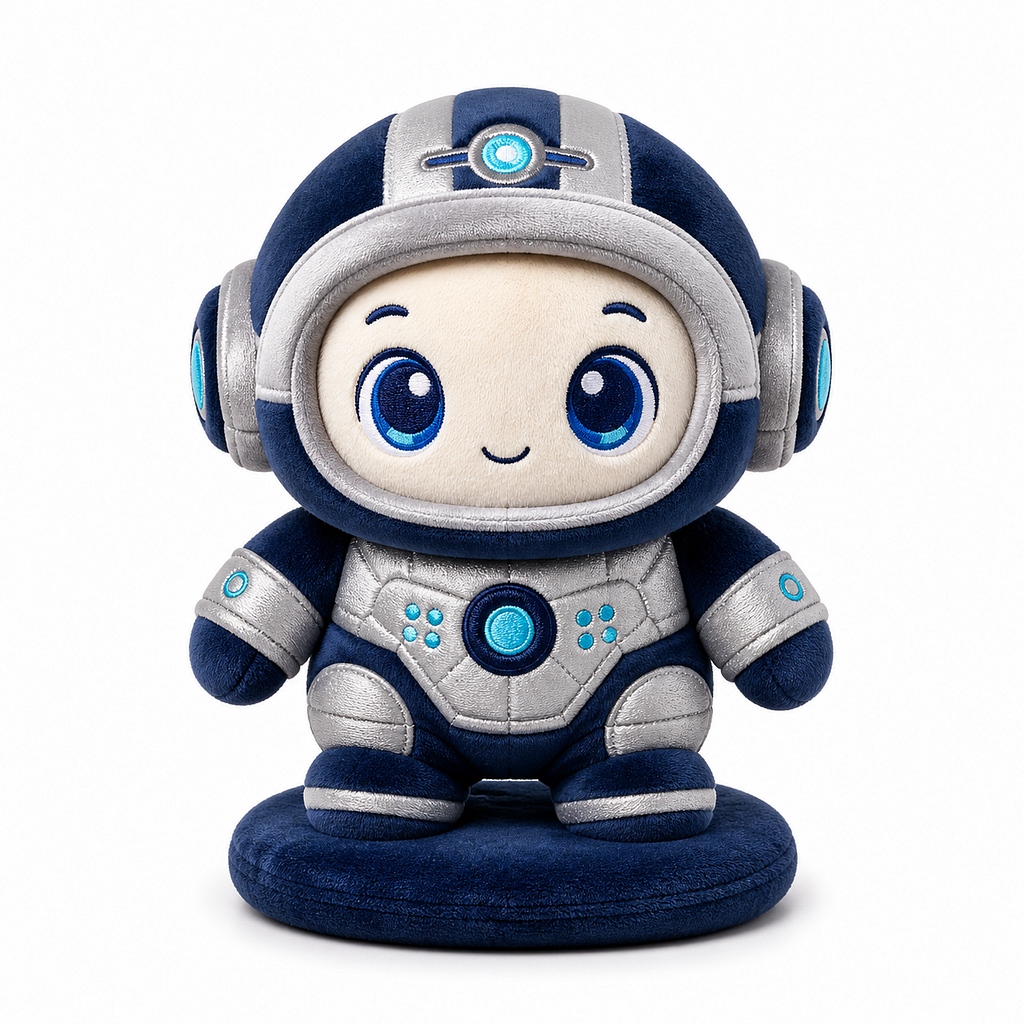
The public US team project began in February 2026 and combined an ESP32-based AI plush toy with a companion app. The reported quantity is more than 10,000 units for the US market. Joy coordinated customer communication and milestones with the project team. The case illustrates why electronics, app behavior, plush structure, certification and mass-production planning must develop as one product system.
Frequently asked questions
Questions buyers ask before development
Is ESP32 right for every smart toy?
No. The decision depends on connectivity, audio, memory, power, security, cost and the customer’s platform.
Can a proof of concept use a development board?
Yes, when its purpose is clearly limited. Production design still requires an appropriate PCB and validation.
Can the toy work offline?
Offline functions are possible, but content size, processing, updates and expected interaction must be defined first.