Choose the right sound-book format
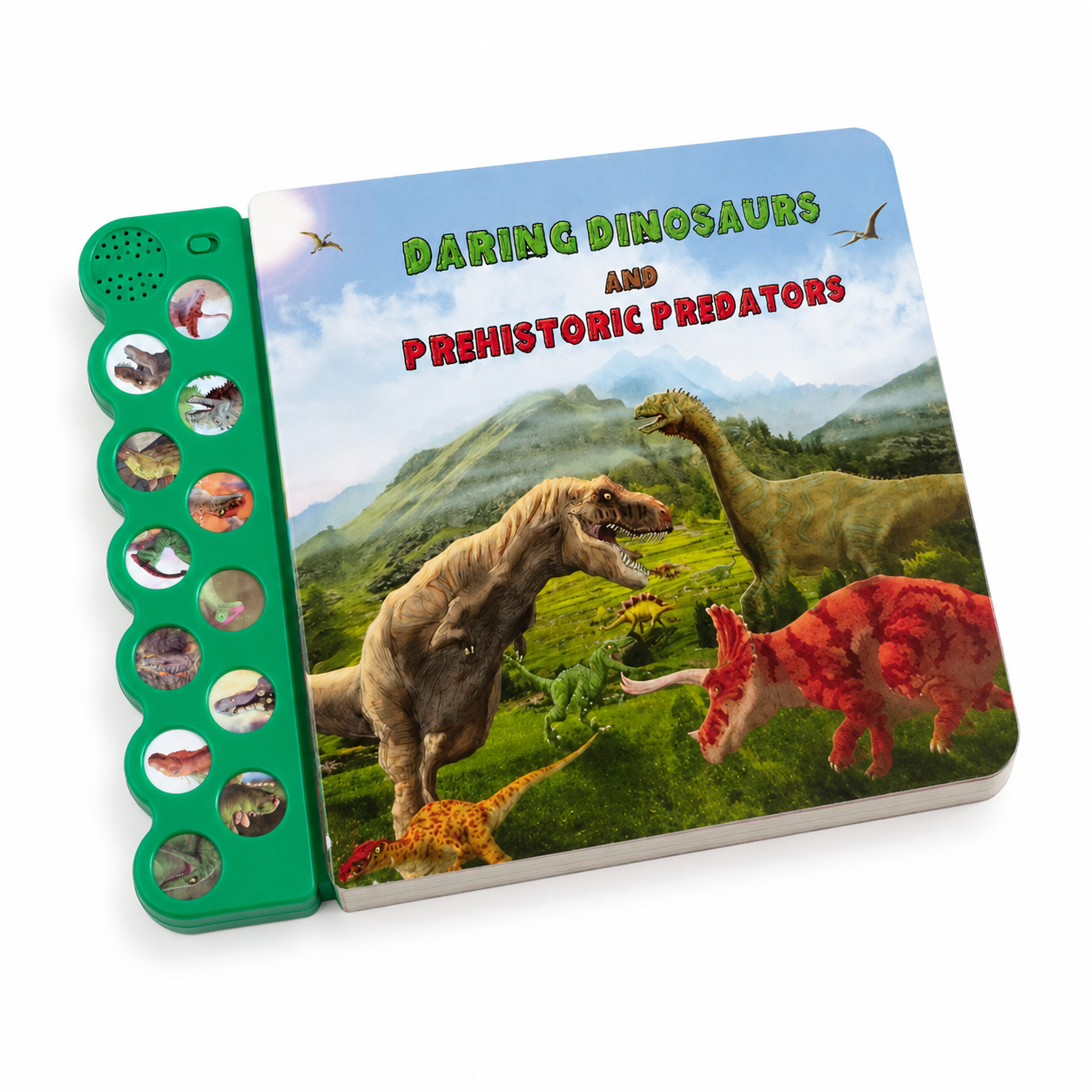
Common formats include board books with integrated button panels, shaped books, learning cards, poster products and books with separate sound modules. The correct construction depends on age grade, page count, button quantity, expected sound duration, artwork, packaging and target cost. A clear product map should connect each printed icon or page action with an audio file and an electronic input.
Prepare artwork and audio for production
Artwork files need trim, bleed, safe areas, color settings and confirmed page order. Audio should be named systematically, edited to suitable levels and approved before programming. Voice, music and sound effects must have appropriate rights. A master mapping table prevents a common production error: correct electronics with the wrong sound assigned to a printed button. Changes after sample approval should use revision numbers.
Engineer buttons and the sound module
Button feel depends on printed layers, spacers, domes or switches, travel and alignment. The module needs suitable memory, amplifier, speaker, power source and programming connection. Speaker openings should produce clear sound without creating access to components. Battery compartments and screws require age-appropriate design. Repeated button tests, drop-related checks and sound verification help expose weaknesses before volume production.
Understand samples and quantity planning
Early samples may confirm print size, button positions and audio mapping before final materials are available. A production-intent sample should validate colors, lamination, board thickness, module placement, sound level, packaging and instructions. MOQ depends on printing, electronic components, book construction and packaging rather than a universal number. Combining artwork approval and electronic approval into one record makes the production release clearer.
Plan testing for the destination market
Requirements depend on whether the item is treated as a toy, the intended age, materials, electronics and sales market. Mechanical and physical properties, flammability, chemicals, sound level, battery safety and electromagnetic requirements may apply. Labels and instructions need to match the tested configuration. A qualified laboratory should confirm the final scope; the project team can prepare samples and technical information for that process.
Japan project example
A public team project for a Japanese customer covered 1,000 custom sound books. The project demonstrates the importance of accurate audio mapping, clear sample confirmation and coordination between print and electronics. Customer feedback images are presented on the portfolio with identity protected. Joy coordinated communication with the project team; no unsupported schedule or certification claim is added to this case.
Frequently asked questions
Questions buyers ask before development
How should audio files be supplied?
Use clearly named final files plus a mapping sheet that connects every sound with its page and button.
Can the book use multiple languages?
Yes, if the memory, switching method, artwork and audio mapping are defined and tested.
What determines MOQ?
Printing setup, board construction, sound module components, packaging and the approved specification all affect quantity.